Material Option /
Neochromes®
HIGH QUALITY →
LIGHT SENSITIVE
LENSES
CHANGE
/ ↔ WITH → YOU
With Neochromes® lenses, feel right in any light, in any activity indoors or outdoors, in all kinds of weather and in all seasons, for ultimate convenience and great looks.
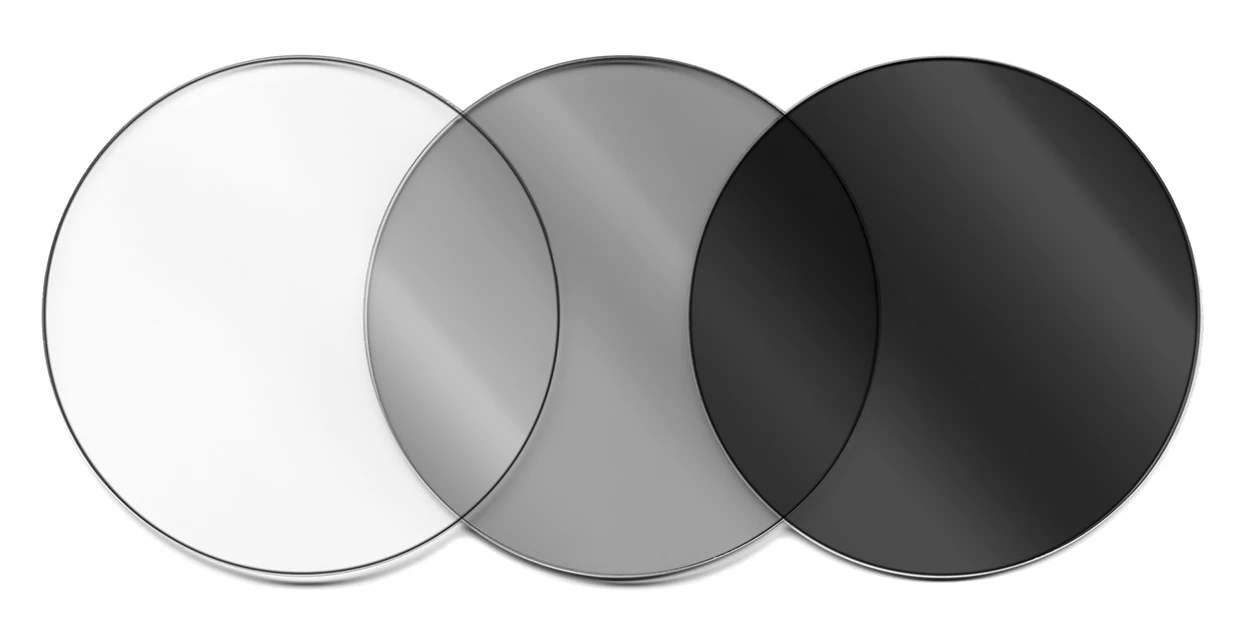
Neochromes® lenses adapt and darken when exposed to UV sunlight.
FEATURES →
- Provide high protection against blue light when dark
- Block 100% of damaging UVA & UVB rays
- Quickly adapt to changing light conditions
- High performance in a broad range of temperatures
- Consistent performance across a wide range of materials
The benefits of Neochromes® lenses can be demonstrated by any eyecare professional and are easy for wearers to understand. They’re specifically designed to provide answers to the most common questions, quickly and easily.
DARK
IN SECONDS
FADE-BACK
3-MINUTE
*Measured at 555nm at 23ºC using ISO 8980-3: 2013/ ANSI Z80.3 2015
THE KEY→
HIGH-PERFORMANCE PHOTOCHROMIC
/↔DYES
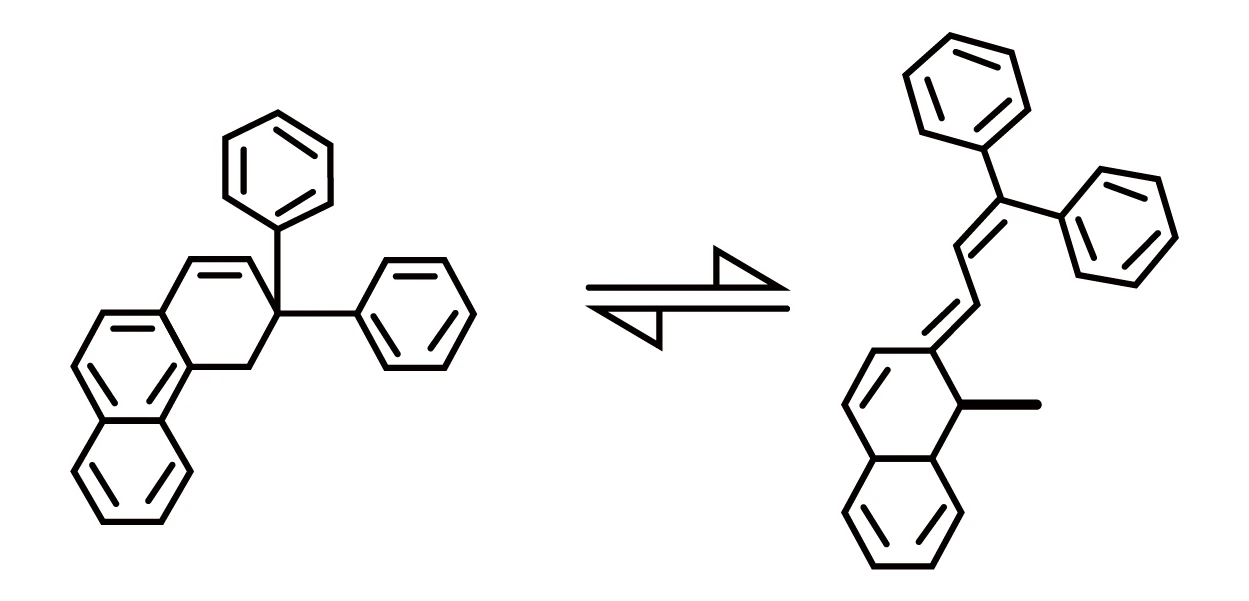
Photochromic molecules have, under normal conditions, a folded shape that makes them transparent. When absorbing ultraviolet light, their shape changes, the molecular structure opens and absorbs visible light. The two forms of the photochromic molecule – open and closed – exist in balance with a bond that’s continuously broken and rebuilt.
The photochromic molecule constantly switches between its transparent and dark states. The number of molecules during the dark state depends on the amount of UV light in the environment and other factors such as temperature. If the lens is exposed to significant levels of UV light, most of the molecules will be in the open state, darkening the lenses. In the absence of UV light, the molecules will remain closed, resulting in clear lenses.
Photochromic dye molecules change from a closed (transparent) shape …
… to an open, light-absorbing (dark) shape when exposed to UV light.
CONSISTENCY/ OF
↔ PERFORMANCE
TEMPERATURE/
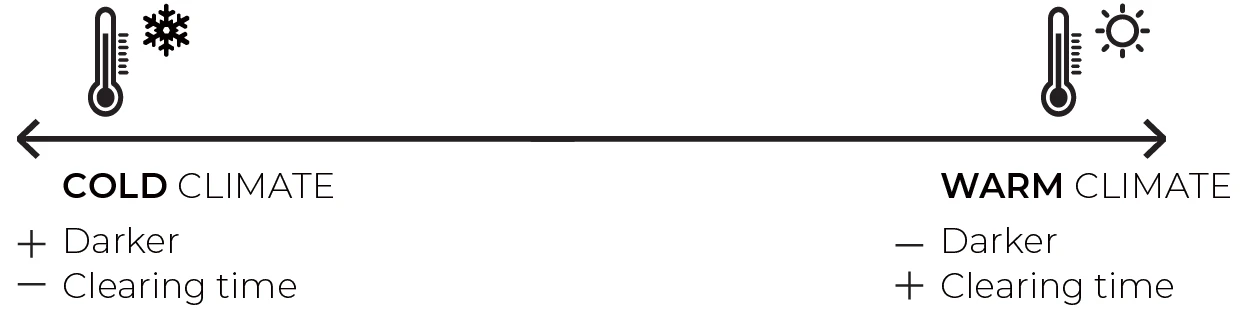
Any photochromic lens is affected by temperature. In cold temperatures, photochromic lenses darken more and take longer to fade back. In warmer temperatures, the lenses don’t darken as much and fade back more quickly. This is a characteristic of the state of balance in a photochromic system. Photochromic molecules use thermal energy to return to the clear state.
In Neochromes® lenses, special attention is paid to performance at high temperatures. At high temperatures (33°C / 91°F), they will reach functional darkness that is similar to many polarized lenses (17% light transmission). At this temperature, the fade-back time is around 32 seconds.
PROTECTION FROM
HARMFUL UV & BLUE LIGHT →
Neochromes® lenses help wearers care for their eyes by blocking 100% of damaging UVA and UVB rays. They also filter blue light, especially when activated outdoors. While blue light is emitted from computers, tablets, and smartphones, sunlight is a much more intense source of blue light.
BLUE LIGHT
FILTERING/
Blue light is the portion of the visible light spectrum with the hightest energy, usually consider to be wavelenghts in the range of 400-500 nm. sunlights is, by far, the largest soure of blue light in our environment. The screens of our computers, phones and other digital devices are also sources of blue light. Neochromes® lenses offer maximum protection against these potentially harmful wavelenghts of light.
BLUE LIGHT FILTERING
Absorption (400 nm – 420 nm)
UNACTIVATED →
80%
ACTIVATED →
91%
COLORS
GREY & BROWN
Darkness intensity: 11%- 88%